How to Host a Murder Mystery Party Night
A practical guide to hosting a murder mystery party: choosing a format, casting your guests, timing the evening, and salvaging it when nobody stays in character.
A murder mystery party is one of the few social formats that gives shy people something to do and stops confident people from dominating, which is why it has survived nearly a century of changing fashions. It is also very easy to run badly.
Almost every failure comes from the same source: the host decided what the evening would be like without checking whether their guests wanted that evening. Everything below follows from getting that right.
Step one: decide what kind of night this actually is
Be honest about your guests. There are three broadly different evenings hiding under the same name.
The performance night. Everyone plays a character, in costume, with an accent. Enormous fun with the right group and excruciating with the wrong one. Requires guests who will commit. If you can think of two people on your list who would rather die, do not choose this.
The puzzle night. Guests are themselves, working a case together. Evidence, timelines, arguments. Better for mixed groups and for people who find performing stressful. Much easier to host, because you are not managing anyone's stage fright.
The dinner with a mystery attached. The game is a structure for the evening rather than the point of it. Lower intensity, longer running time, more talking about other things. Perfectly valid and often the most enjoyable.
Pick one. A night that tries to be all three ends up being none.
Step two: numbers and casting
Six to eight is the sweet spot for a scripted party. Below six the plot thins out; above ten, characters start having nothing to do and people drift off to the kitchen. If you have more than ten guests, run two parallel groups rather than one enormous one.
When casting, give the largest and most demanding roles to the people who want them, and never to the person you are hoping will "come out of their shell". Being handed the murderer's part when you did not want the attention is not a gift, it is an ambush. Quiet guests do better with roles that have one strong secret and few lines.
Cast the murderer last, once you can see who is enjoying themselves.
Step three: the three-act timetable
Time is what hosts get wrong most often. A rough shape that works:
- Arrival and warm-up, 30 minutes. Drinks, character cards handed out, no plot yet. This is where people get comfortable enough to play.
- Act one, 45 minutes. The body is discovered. First round of accusations and denials. Serve food during this, not before.
- Act two, 45 minutes. New evidence lands. Everyone's first theory falls apart. This is the act that needs a nudge from the host if the energy dips.
- Accusations and reveal, 30 minutes. Everybody commits to a name before the answer is given. Written accusations are better than spoken ones because nobody can quietly change their mind.
That is about two and a half hours of game. Any longer and you are relying on goodwill.
Step four: food that survives an investigation
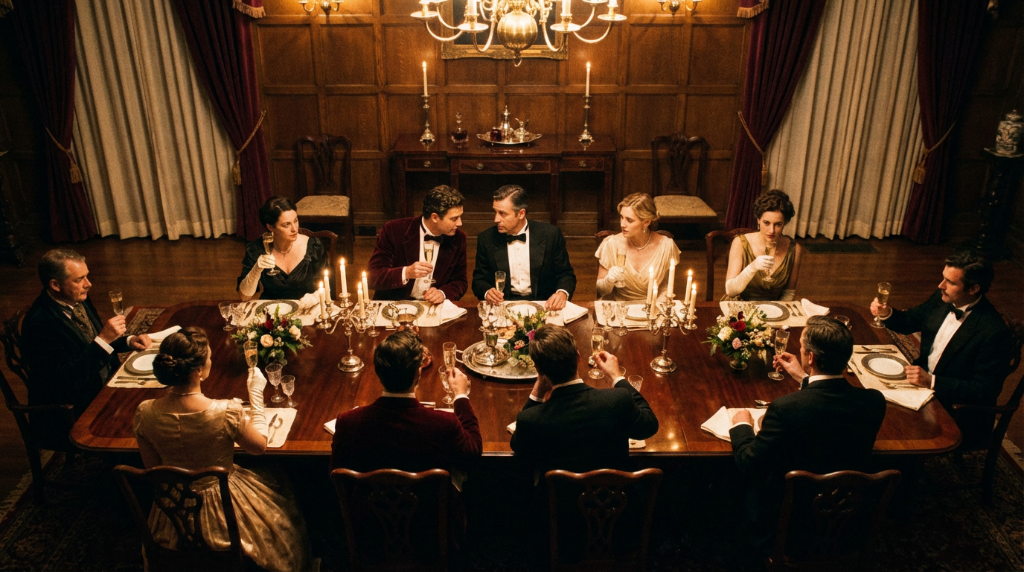
Anything requiring a knife and fork keeps people seated, and seated guests do not investigate. Buffets, sharing boards and anything eaten standing up work far better. Put the food somewhere that forces people to walk past each other.
If you are doing a formal dinner, accept that the game will pause while people eat, and plan the pause deliberately rather than fighting it.
Step five: props and atmosphere without spending much
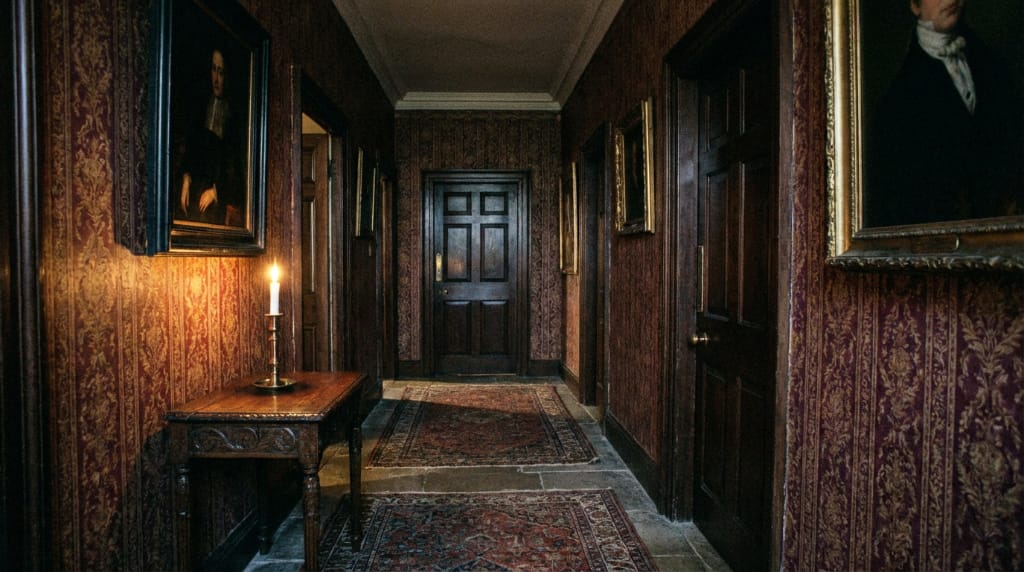
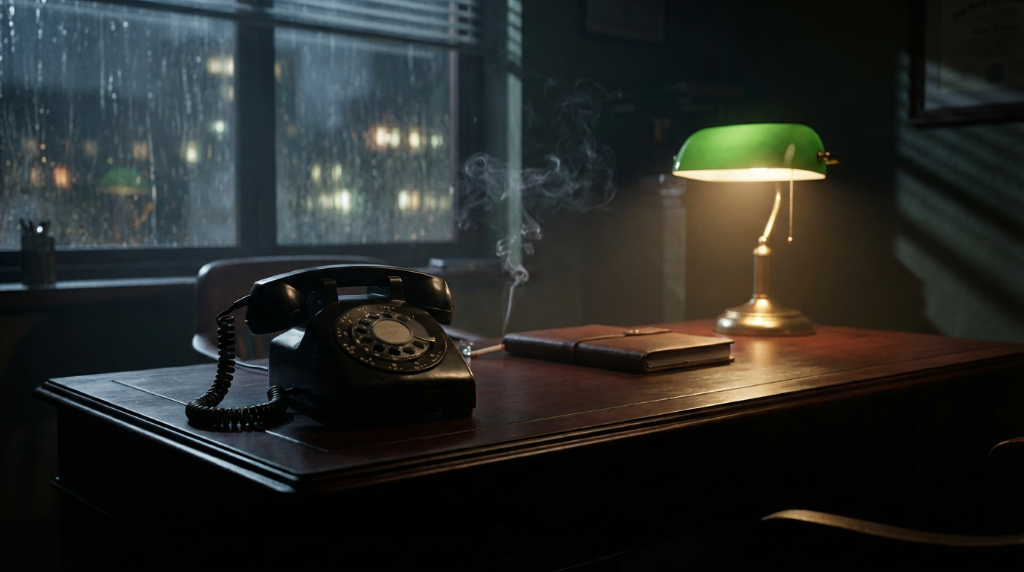
Atmosphere is mostly lighting. Turn off the overhead lights, use lamps and candles, and you have done ninety per cent of the work. A playlist of something period-appropriate at low volume does the rest.
For props, a few well-chosen physical objects beat a pile of printouts. One handwritten letter with a torn corner is worth more than ten pages of character backstory nobody will read.
The five ways it goes wrong
- Nobody read their character notes. Fix: a five-minute reading period at the start, out loud if necessary, and one-line reminder cards.
- One person solves it in twenty minutes. Fix: hold back a piece of evidence to release in act two.
- The energy dies after the meal. Fix: schedule a scripted interruption. A phone call, a second body, a letter arriving.
- Two guests refuse to play. Fix: give them a job instead of a character. Coroner, note-taker, timekeeper. Participation without performance.
- The host is too busy hosting to run the game. Fix: appoint a co-host. Genuinely the highest-value thing in this article.
A warm-up that costs nothing
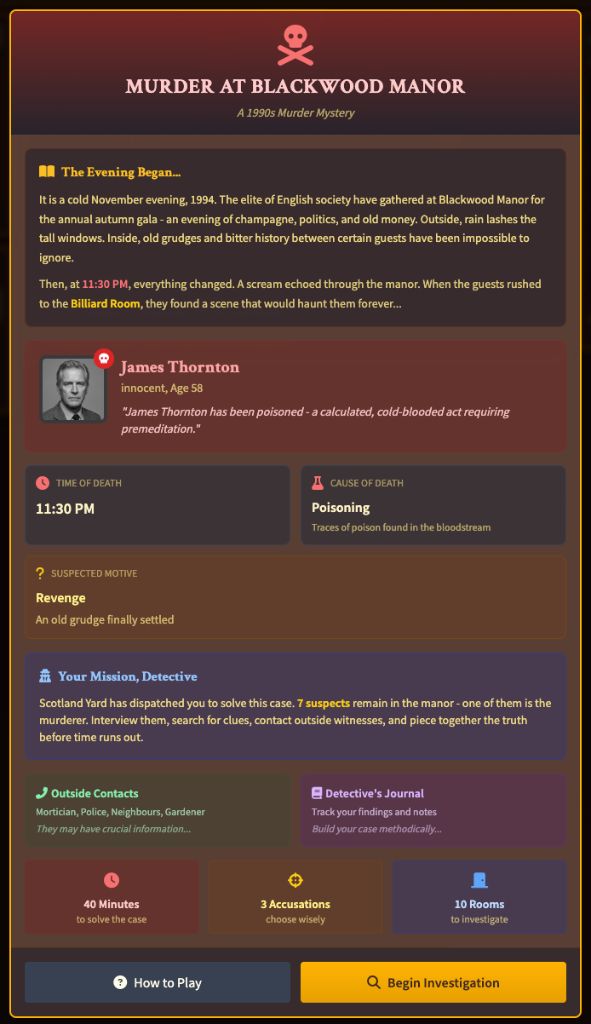
If your group has never done this before, a shared warm-up helps enormously. Put our Daily Case on a laptop or a television during the arrival half-hour and let people wander over and shout questions at the screen. It runs about twelve minutes, needs no account and no card, and it teaches everyone the basic grammar of the evening: ask a question, weigh the answer, find the contradiction.
It also gives arriving guests something to do that is not standing awkwardly near the crisps.
After the reveal
Do not let the evening stop dead the moment the murderer is named. Ask each guest what their theory was and why. The wrong theories are usually more entertaining than the right one, and it gives the people who guessed badly a graceful exit.
For groups who want a longer session afterwards, the full-length investigations run to an hour at Rookie difficulty, and our guide to deduction is a good thing to send round in advance for a group that wants to take it seriously.
Dim the lights. Someone is about to die.