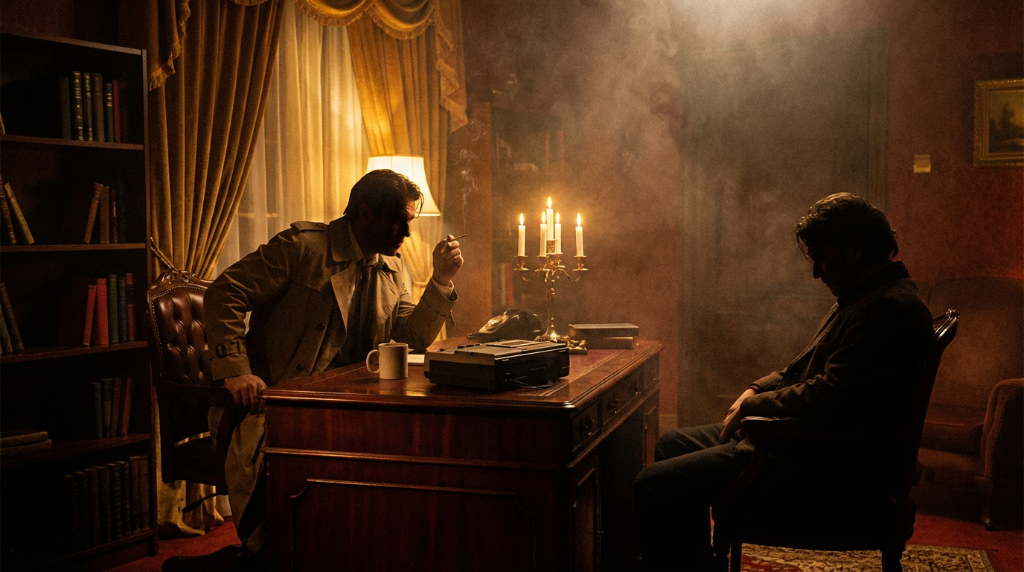
Whodunit vs Howcatchem: The Two Shapes of Detective Fiction
One hides the murderer until the last page. The other shows you the killing in the opening scene. Why both work, and what each one asks of the audience.
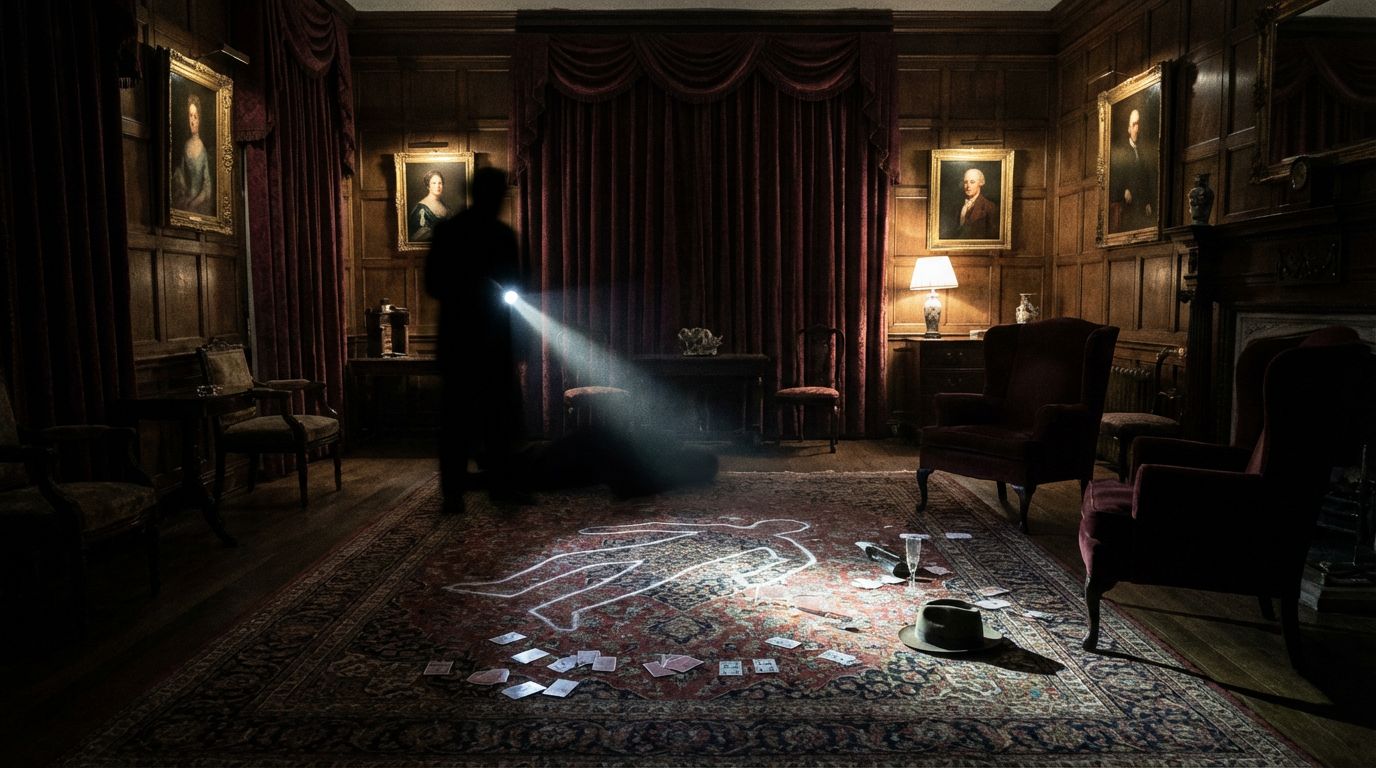
Almost every detective story you have ever encountered belongs to one of two families, and knowing which one you are in changes what you should be paying attention to.
The whodunit conceals the murderer. The howcatchem shows you the murderer in the first five minutes and makes you watch them get caught. They look like opposites. They are actually solving the same problem from different ends.
The whodunit and its contract
The whodunit is the Golden Age form, the one Agatha Christie, Dorothy L. Sayers and their contemporaries refined between the wars. A closed circle of suspects. A body. A detective. A reveal.
Its defining feature is a contract with the reader: the information required to solve the crime is on the page, and a sufficiently attentive audience could get there first. That contract was taken seriously enough to be written down. Ronald Knox published his "Decalogue" of detective story rules in 1929, S. S. Van Dine published twenty rules in 1928, and the Detection Club, founded around the same time, had its members swear an oath about fair play.
Some of those rules read strangely now — Knox's ban on secret passages and on relying on intuition still holds up; other clauses have aged very badly indeed. But the underlying principle is why the form endures. The reader is a participant, not a spectator.
What a whodunit demands of you is attention. Every character is a candidate, so every detail could be the one that matters.
The inverted story, and Columbo
The other shape is older than most people assume. R. Austin Freeman is credited with inventing the inverted detective story in his 1912 collection The Singing Bone, where the crime is narrated first and the investigation follows. The reader knows everything; the pleasure is watching a clever plan meet a cleverer investigator.
The form's most famous exponent is Columbo, which built almost every episode on the same structure: the murder in full, in daylight, in the opening act; then a shabby lieutenant who has plainly worked it out already and spends fifty minutes proving it. That is where "howcatchem" comes from as a piece of shorthand.
What a howcatchem demands is not attention but anticipation. You are not looking for the killer. You are watching for the mistake — the detail the murderer overlooked while you were watching them overlook it.
Why the howcatchem is harder to write
It is counter-intuitive, but the form with no secret is the more difficult one.
A whodunit can coast on the question itself. Curiosity keeps an audience in their seat even when a scene is doing nothing. A howcatchem has given that away, so it must earn attention through character, tension and craft instead. Every scene has to be independently worth watching, because there is no mystery pulling you forward.
Which is exactly why the great howcatchems are so often about personality. The interest is in the duel, not the puzzle.
Which shape do games use
Games skew heavily whodunit, for a practical reason: interactivity needs an unknown. If the player already knows the answer, the challenge has to come from execution rather than discovery, and that is a much harder thing to build.
There are notable exceptions that make it work. Some games cast you as the murderer trying to escape suspicion, which is a howcatchem played from the other chair. Social deduction games do something similar: the werewolf is playing a howcatchem while everybody else plays a whodunit at the same table.
Where BACKSTABBERS sits
We are a whodunit, unambiguously. Eight suspects, a body, a closed setting, and a solution you do not know when you begin.
But there is a small piece of howcatchem structure underneath. To win, you must name the murderer and the murder weapon. That second requirement means identifying the culprit is not the end of the work. You still have to reconstruct how it was done, and the how is where the proof lives.
The evidence mechanic pushes the same way. Suspecting somebody achieves nothing. What advances a case is holding a specific piece of evidence that contradicts a specific claim, and presenting it — at which point they crack. That is a fair-play contract of the sort Knox would have recognised, translated into a mechanic: the information you need is genuinely in the world, and a careful player can find it.
If you want to try the shape for yourself, the Daily Case takes about twelve minutes and needs no account, and our beginner guide to deduction covers the method for working a closed-circle case properly. For longer form, the full-length investigations give you up to an hour.
Know the shape of the story and you are already halfway to the solution.